
Conference
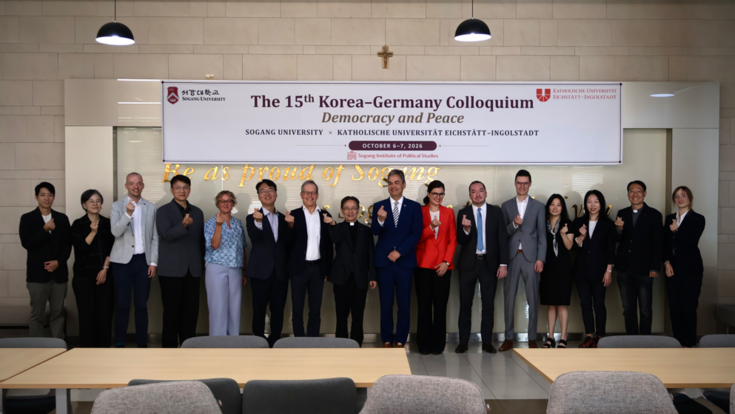
Building Trust through Dialogue and Practical Cooperation – 15th Korea-Germany Colloquium at Sogang University
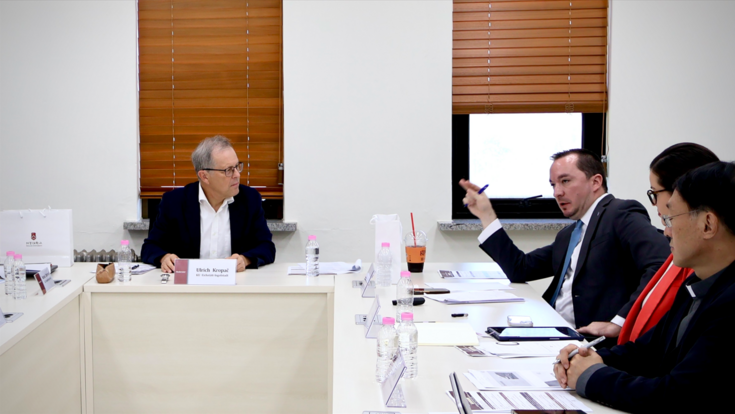
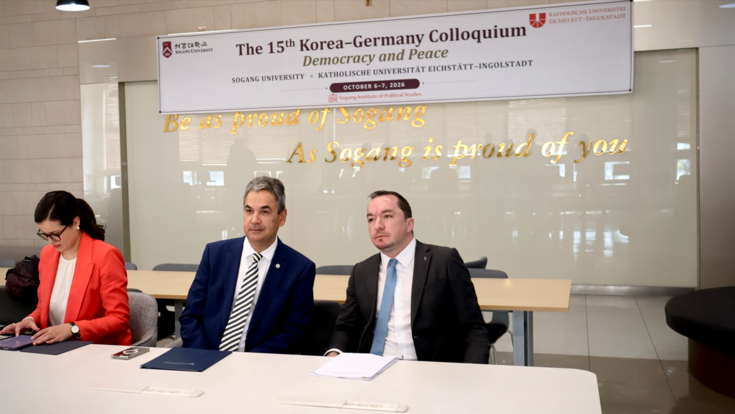
Jointly organised by Sogang University and the Catholic University of Eichstätt-Ingolstadt, the colloquium brought together scholars from Germany and South Korea under the theme “Democracy and Peace”. The interdisciplinary programme examined how democratic societies can preserve social trust and sustain dialogue amid growing polarisation, technological change and cultural conflict.
Felix Glenk, Head of the Korea and Mongolia Offices of the Hanns Seidel Foundation, contributed to the discussion under the thematic axis “Peace and Democracy”. His presentation, “From Civic Dialogue to Peacebuilding: Practical Approaches to Democratic Resilience and Trust-Building in Northeast Asia”, connected the academic debate with experiences from the Foundation’s cooperation with local and regional partners.
Importance of Trust in Cooperation
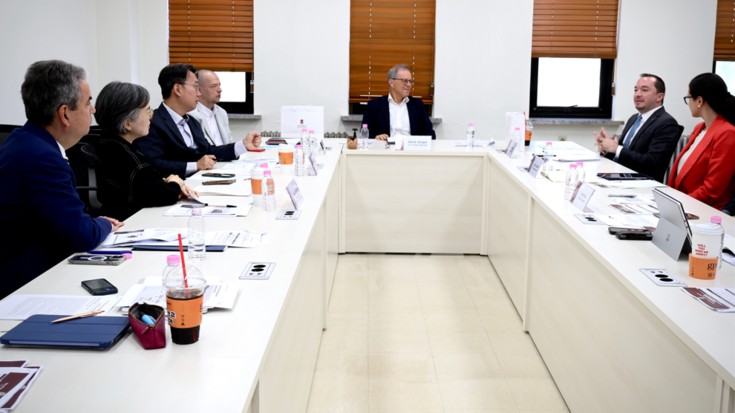
A central question was how cooperation can begin when political trust is weak. Northeast Asia is closely connected economically, yet historical grievances, strategic competition and limited institutionalised dialogue continue to complicate regional relations. “Uncertainty creates room for competing narratives, misperception, and worst-case assumptions,” Glenk explained. “Dialogue does not remove the underlying conflict, but when communication channels disappear completely, we lose all information, relationships, and possibility to clarify intentions.” Maintaining opportunities for exchange can help participants understand one another’s intentions and constraints, even where disagreement remains.
Europe’s post-war reconciliation and integration offered a historical reference for this discussion. The Schuman Declaration and the Helsinki Accords illustrated different ways in which structured cooperation created opportunities for communication before full trust existed. Throughout the presentation, Glenk emphasised the relevance of regular consultation and predictable procedures, while adding that Northeast Asia requires approaches adapted to its own circumstances.
Practical Entry Points for Regional Exchange
Environmental cooperation related to North Korea provided one example of an arena where practical dialogues may take place in the Korean Peninsula. Shared challenges involving forests, wetlands and migratory birds create reasons for technical exchange and scientific cooperation across political borders. Such engagement can connect environmental experts with international networks and maintain professional relationships when broader political dialogue is difficult.
Subsequently, Mongolia also illustrated how long-term partnerships can develop into wider professional networks. Since 1993, HSF’s legal and administrative cooperation has included training for judges and administrative officials, legal studies and working visits between Mongolia and Bavaria. These relationships have provided a foundation for broader regional exchange, including connections with Korea and Japan.
Youth engagement and security dialogue offered further examples. Repeated exchanges on climate, sustainability and negotiation can help young people overcome stereotypes and build relationships that continue into their professional lives. By bringing researchers and practitioners together, security dialogue creates opportunities to clarify different threat perceptions and strategic assumptions. Its value can lie in reducing uncertainty, even when participants do not reach agreement.
Connecting Academic Perspectives and Practical Experience
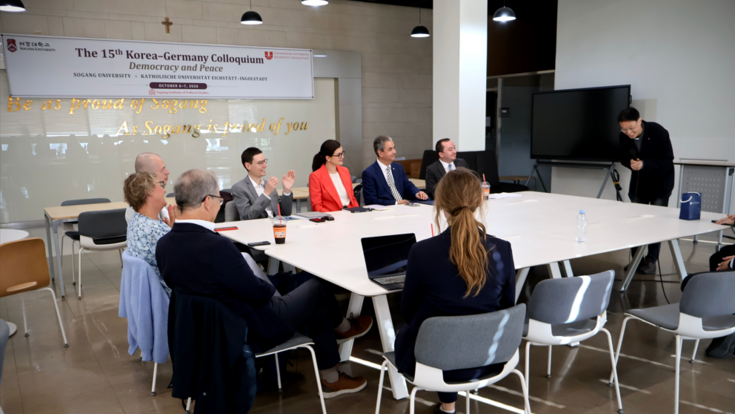
Professor Sung Kyung Kim of Sogang University served as the discussant for Glenk’s presentation. During the exchange, Professor Kim highlighted North Korea’s abandonment of reunification as a goal, contrasting this with South Korea’s approach of peaceful coexistence leading gradually towards unification.
The discussion that followed brought to attention the challenges of trust-building on the Korean Peninsula into the wider debate on democracy and peace, providing additional perspectives on the values and practices that sustain coexistence.
Continuity Matters
HSF Representative Felix Glenk stressed that dialogue does not automatically create trust and that professional networks remain vulnerable to geopolitical developments. Political foundations can nevertheless help preserve spaces for learning and cooperation by connecting academia, civil society and public institutions through sustained local partnerships.
“Trust is rarely the starting point. It is often the product of repeated, useful and predictable cooperation,” Glenk noted. HSF’s contribution to the 15th Korea-Germany Colloquium once again highlighted the importance of maintaining these relationships over time, so that communication and practical cooperation remain possible even under difficult political conditions.