
South Korea's 2026 Local Elections
A Test of Public Sentiment After the State Crisis
On 3 June 2026, South Korea held its ninth nationwide local elections. Voters elected 16 metropolitan mayors and provincial governors, 227 local administrative heads, and approximately 4,000 members of local councils. In addition, by-elections for the National Assembly were conducted.
Following Yoon’s controversial declaration of martial law in December 2024, his impeachment, and the early presidential election of 2025, South Korea’s democracy continued to attract close scrutiny. For the ruling Democratic Party of Korea (DP), the elections were an opportunity to confirm its national strength at the local level. The conservative People Power Party (PPP), meanwhile, needed to demonstrate that it remained capable of mobilizing support despite the political fallout from the Yoon crisis.
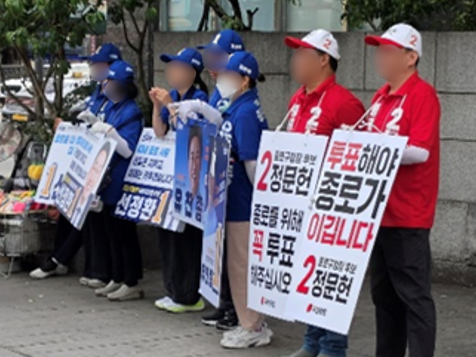
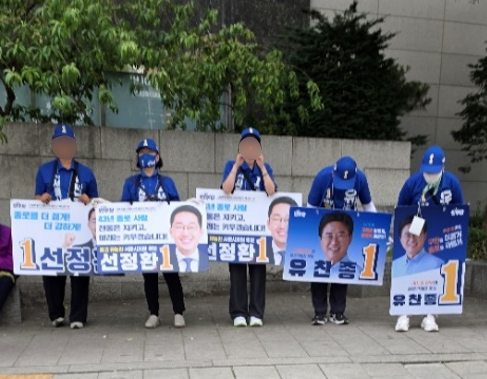
During the official campaign period, the streets were dominated by highly personalized campaigning and the very visible election style characteristic of South Korea. Loudspeaker vehicles, campaign trucks, election songs, brightly colored jackets, sashes, candidate numbers, and campaign teams stationed at subway exits became part of everyday life. Even before election day, signs pointed to strong voter mobilization. Early voting, held over two days, reached a record 23.51 percent turnout for local elections in South Korea. In total, around 44.6 million people were eligible to vote, including 151,532 foreign nationals.
Both major parties interpreted the high early-voting turnout as evidence of heightened political engagement, which further intensified the tone of campaigning in the final days before the election. Allegations concerning misinformation, online defamation, digital manipulation, and possible interference by public officials brought questions of electoral fairness and the handling of deepfakes to the forefront.
On election day itself, several polling stations in Seoul experienced organizational problems. In particular, a shortage of ballot papers in Jamsil 7-dong, Songpa District, caused interruptions and required voting to be extended until 10 p.m. Subsequently, demonstrators temporarily blocked the transport of a ballot box and raised allegations of electoral fraud. The National Election Commission reported that polling stations in Songpa, Gangnam, and Gwangjin districts were affected. These incidents highlighted how sensitive issues of election administration and institutional trust remain in the aftermath of the state crisis.
The most closely watched contest took place in Seoul. The mayoral race developed into a dramatic neck-and-neck competition between incumbent mayor Oh Se-hoon of the PPP and DP candidate Chong Won-o. Although exit polls initially suggested a victory for the DP candidate, Oh gained ground as the vote count progressed. Votes from conservative-leaning districts such as Gangnam, Seocho, and Songpa were particularly important in strengthening his position. With 97.7 percent of the votes counted, Oh led narrowly with 48.94 percent, compared to Chong’s 48.34 percent. As a result, Seoul remained under conservative leadership.
Nationwide, however, the local elections confirmed the strength of the ruling DP. The party won 12 of the 16 mayoral and gubernatorial positions, thereby consolidating its return to local power. Besides retaining Seoul, the PPP secured victories in Daegu as well as North and South Gyeongsang Provinces. In the National Assembly by-elections held simultaneously, the PPP won four of the fourteen contested seats, most of which had previously been held by the DP.
The elections therefore presented a nuanced picture. The DP remains the dominant political force nationwide and succeeded in significantly expanding its power base. At the same time, the PPP is far from marginalized. The narrow victory in Seoul in particular demonstrates that the conservative opposition continues to possess regional strongholds, local organizational structures, and voter groups that can be effectively mobilized despite the political burdens resulting from the Yoon crisis.
The 2026 local elections were therefore more than a local vote. They reflected the political mood of a country still grappling with the consequences of a severe state crisis. Questions of democratic stability, institutional trust, political accountability, and social polarization remain central. For President Lee Jae-myung, the results provide political momentum. For the opposition, they also indicate that a political comeback remains possible if it can regain trust beyond its traditional voter base.