
Forum
‘The Future Beyond Division:’ Sharing the Experience of Germany’s Gruenes Band at the 51st Korean Unification Forum
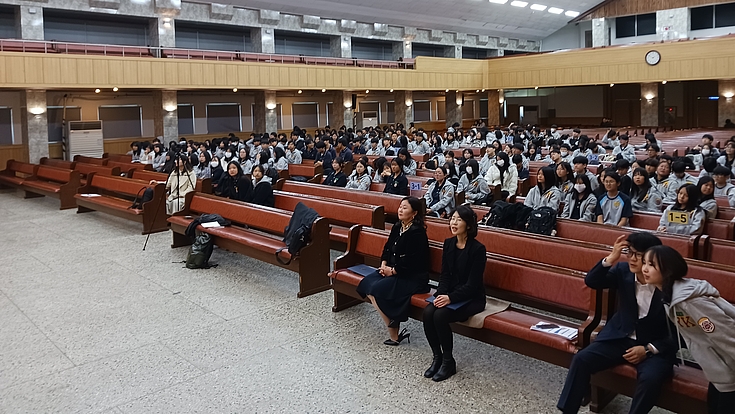
Following up on last year’s forum, the 51st Korean Unification Forum (Tongil Hankuk Forum) sought to move beyond historical examples and explore practical approaches to cross-border environmental cooperation. To this end, the Hanns Seidel Foundation (HSF) Korea Office participated in a presentation and discussion with students at Seoul’s Yumkwang Middle School. At the heart of the forum was a presentation by Felix Glenk, Representative of HSF Korea, who encouraged students to look beyond borders as mere lines on a map and consider their impact on ecosystems and the daily lives of local communities. Drawing on Germany’s experience with division and the creation of the German Green Belt (Grünes Band), he illustrated how a former border could be transformed into a haven for biodiversity through local engagement and environmental conservation.
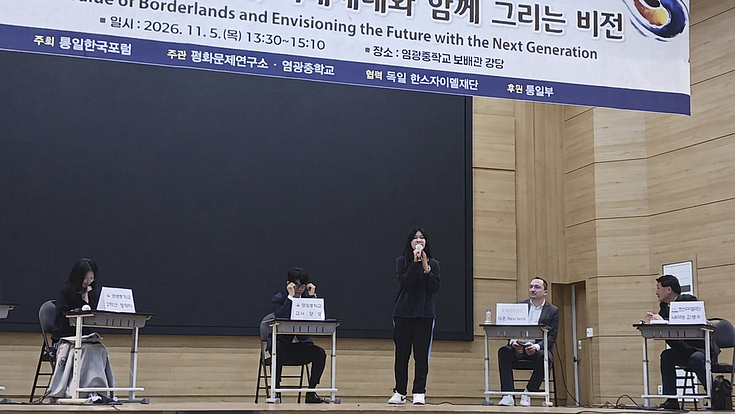
The forum was also an opportunity to explain Germany’s system of political foundations to the students, and emphasize the importance of civic engagement in maintaining democracy. The history and work of HSF were described, including the establishment of the Korea Office. Particular attention was given to projects undertaken in North Korea. HSF’s role in facilitating forestry-related knowledge transfer and international wetland cooperation was showcased, exemplifying the role of the environment in creating networks between countries.
These examples served as topics for consideration among the audience. In the subsequent discussion, students reflected on what was needed to move forward with inter-Korean environmental cooperation. Issues raised included education and regional cooperation. Addressing prejudice and bias was also an important theme of the discussion, with participants sharing their own experiences. The importance of curiosity was the key takeaway, and the students were reminded that as young people, the future direction of their lives could be decided by what they became interested in now.
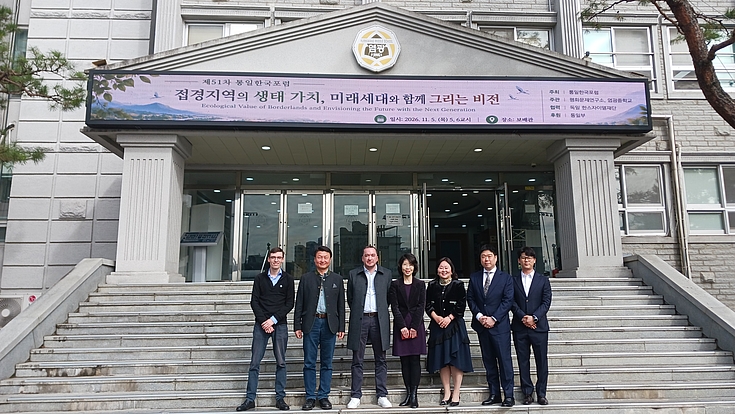
Overall, the forum helped spark interest in cross-border environmental cooperation among future leaders. Through the example of Germany’s Gruenes Band and the work of HSF, students were shown that not only can environmental issues can serve as the basis for cooperation, but also that borders themselves are important natural spaces. Three ideas were emphasized to the students: division shapes the lives of both humans and the region; politics divides but nature can connect; and the future depends on our decisions.