
Conference
Security, COVID-19, and the US-Elections
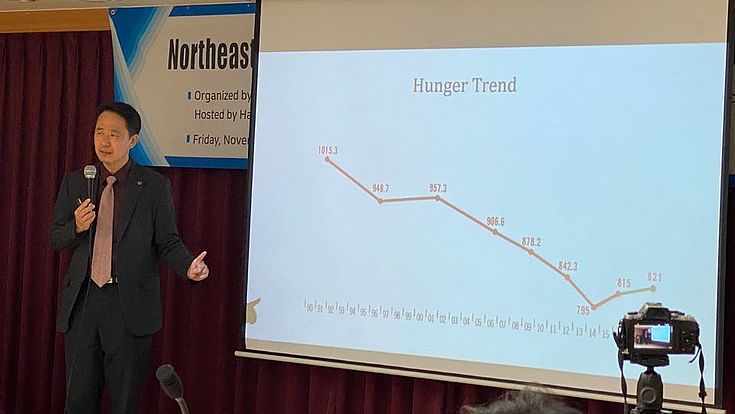
As the very first speaker, Hyoung-Joon Lim, head of the World Food Program Korea ,delivered a keynote speech emphasizing the close connection between hunger and peace. He talked about the importance of investing in nutrition in the DPRK and reminded that the DPRK provided humanitarian assistance to South Koreain 1984. Concerning COVID-19, Mr. Lim added that the DPRK’s preventive measures toward COVID-19 have a tremendous impact on its economy and nutrition. Furthermore, he stressed the need of aid claiming that “if one person is hungry it is the responsibility of all of us”.
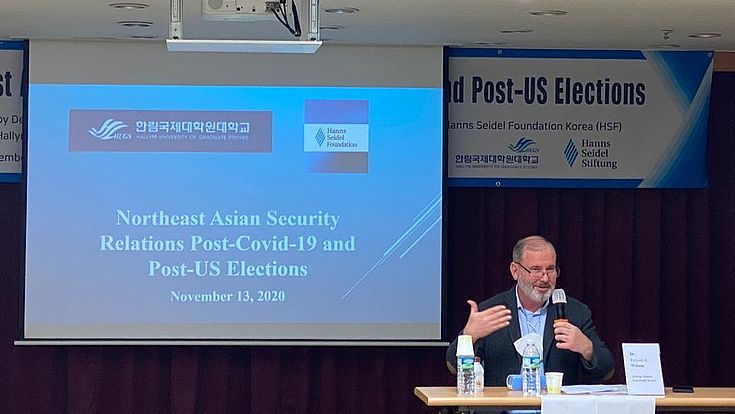
The first session was opened by moderator Dr. Roland Wilson, professor at George Mason University Korea, under the topic on “Impact of U.S. Elections on Security in Northeast Asia”. Prof. Hyun-Wook Kim from the Korean National Diplomatic Academy gave a presentation on “Biden’s Foreign and Asia Policy.” Prof. Jaewoo Choo, professor for China studies at Kyung Hee University, presented about the impact of US elections on security in Northeast Asia. Finally, Dr. Beom-Cheol Shin from the Korea Research Institute for National Security further elaborated on this topic in his presentation on “Prospects on US-North Korea Relations Under the Biden Administration.”
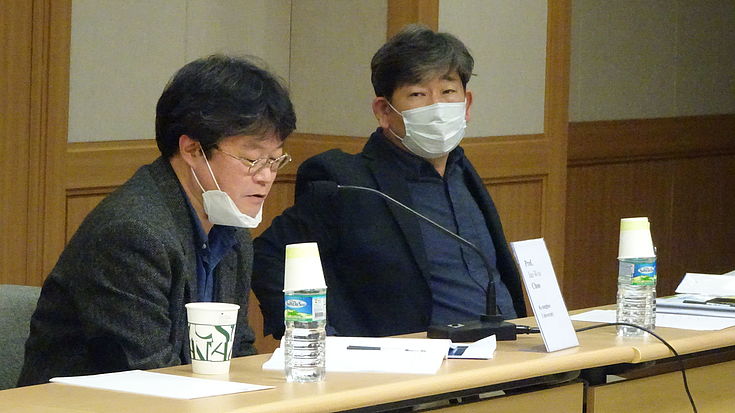
The session was followed by a discussion in which James Banfill, visiting research fellow at Kyungnam University, acted as the leading discussant. The participants conversed about how the U.S.-South Korea alliance will try to bring DPRK to the negotiation table and discussed the possible North Korea approach of the Biden administration, questioning whether or not his approach will resemble the strategic patience of the Obama administration. Moreover, against the background of Biden’s stance towards China, they discussed the U.S. strategy of forming alliances with Northeast Asian states to broaden its power against the PRC. They also discussed South Korea’s role as a possible mediator in the future of the Northeast Asian region.
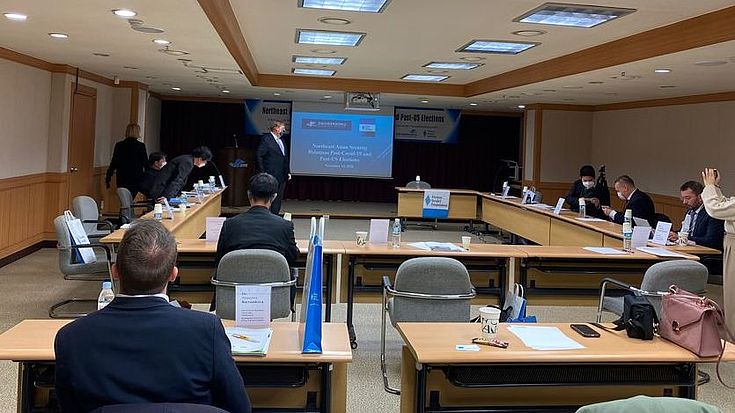
The second session was held under the topic of “South Korean Unification Policy and the New North Policy of President Moon Jae-In: Will It Succeed, or Did It Fail Already?” Moderator Prof. Dr. Ik Joong Youn, Director of Institute of Global Politics and Korea at HUGS, initiated the session. The first presentation was from Prof. Seiko Mimaki, professor at Takasaki City University of Economics, on ‘The Impact of COVID-19 on Japan and the World”. Participating the conference remotely, she related Japanese social habits with Japanese COVID-19 restrictions. Here, Prof. Mimaki stated that the prevention of the virus does not require sacrificing democratic values and gave a representative example of Taiwan.
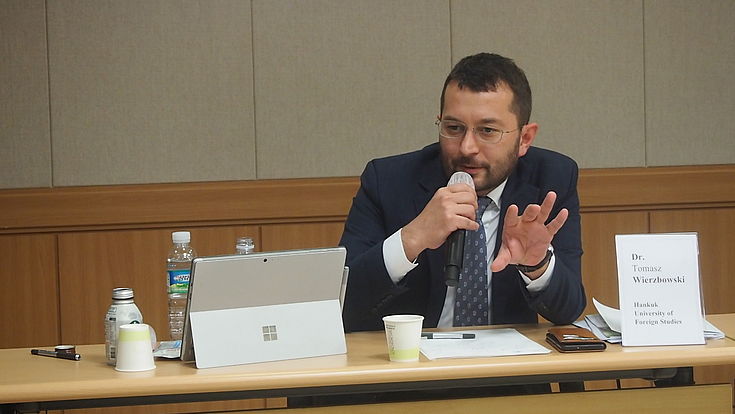
The following presentation was from Dr. Anastasia Barannikova of Far Eastern Maritime University in Vladivostok and Fellow at Kyungnam University of Far Eastern Studies. She talked about Russia’s point of view on the Korean Peninsula from the Korean War to current nuclear problems, describing Russia’s standpoint as “active neutrality”. In the end Dr. Tomasz Wierzbowski, researcher at HUFS EU Institute for EU Studies, carried out the final presentation. From a European point of view, he raised a question on the absolute necessity of a Korean reunification.
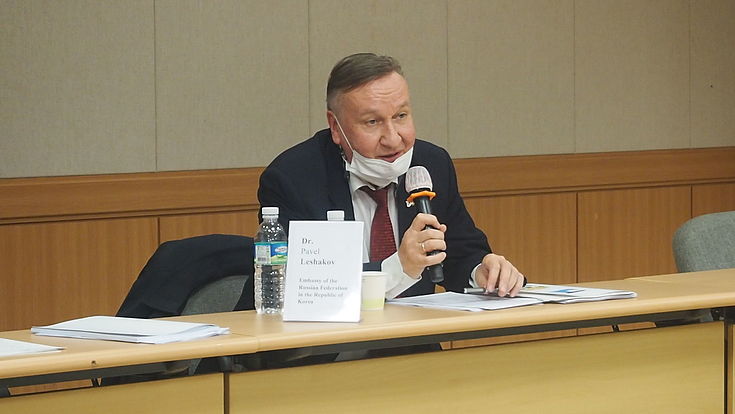
The following discussion was led by Dr. Pavel Leshakov, Counsellor at the Embassy of the Russian Federation in the Republic of Korea, who, following Dr. Barannikova’s point, reviewed the relationship between DPRK, China, and Russia. Dr. Wilson also pointed out that the Korean reunification is already facing hardships since both countries are already growing apart in terms of language, history, and culture.
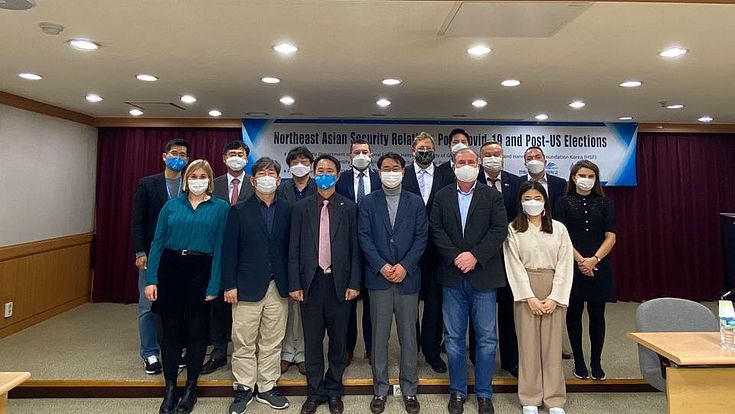
In the concluding roundtable discussion that was led by Dr. Bernhard Seliger, representative of Hanns Seidel Foundation Korea, the participants shared their views about the upcoming presidential election results and reflected on the conference’s findings. They compared the policies expected of the future U.S. president, its impact on Northeast Asia and especially focused on how the U.S. policies toward China and the DPRK will change and how this will impact South Korea. After a thriving discussion, the conference came to an end with hopes for peace on the Korean Peninsula.