
Conference
Connecting Birds, People and Countries: HSF Korea at the Global Flyways Summit 2026
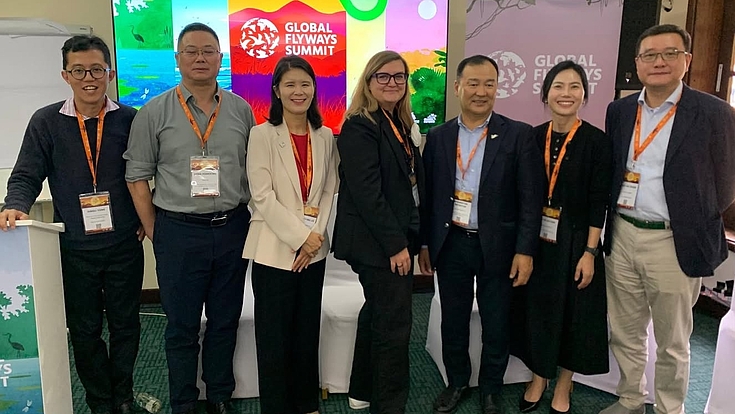
Hanns Seidel Foundation (HSF) Korea participated in the Summit with partners including the East Asian–Australasian Flyway Partnership (EAAFP), the World Coastal Forum Secretariat, and the Wildlife Science and Conservation Center of Mongolia (WSCC). Mr. Martin Harper, Chief Executive of BirdLife International, emphasized during the opening session that effective flyway conservation depends on cooperation across countries, sectors, and communities. He highlighted ongoing efforts to combat the illegal killing of birds and the widespread use of mist nets in Southeast Asia, as well as the growing use of public interest litigation by prosecutors in China to address environmental harm. He also introduced conservation work at Lake Natron in Tanzania, where local communities have taken an active role in protecting this critical habitat. These examples demonstrated that flyway conservation requires collaboration not only among conservation organizations, but also with governments, judicial and law-enforcement authorities, and local communities.
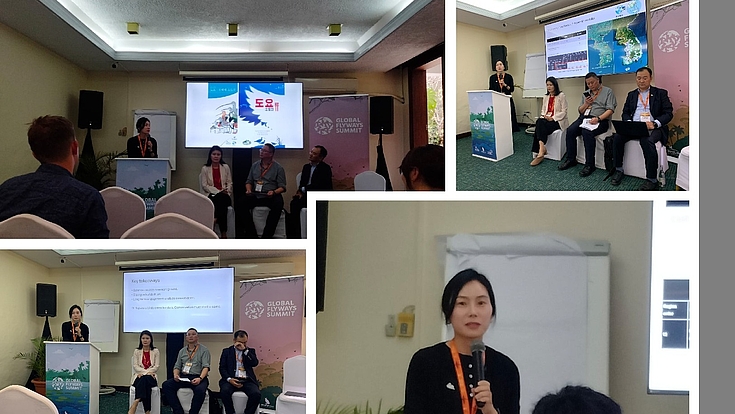
Dr Hyun-Ah Choi, Senior Researcher at HSF Korea, spoke during the Delivering Successful Flyway Conservation: Case Studies from the East Asian–Australasian Flyway session. She presented a case study from the Korean Peninsula, focusing on HSF Korea’s efforts to raise public awareness, support policy dialogue, and connect environmental communities.
Migratory birds connect distant places. Their conservation is therefore not only about protecting individual habitats, but also about connecting people, sharing knowledge and building cooperation across borders - including between the two Koreas.
Northeast Asia lies at the heart of the East Asian–Australasian Flyway and is home to some of the world’s most significant migratory bird conservation initiatives. Despite complex political and environmental challenges, China, Mongolia and the two Koreas have continued to advance research, habitat protection and international cooperation. Yet much of this progress remains underrepresented within the conservation community. Sharing regional experiences more widely is therefore essential - not only to increase their international visibility, but also to ensure that the knowledge, partnerships and lessons developed in Northeast Asia contribute more fully to global flyway conservation.
The Global Flyways Summit reaffirmed a simple but important message: migratory birds cross political borders, and their protection must do the same.