
Roundtable
Expert Roundtable Explores New Directions for Cooperation on the Korean Peninsula
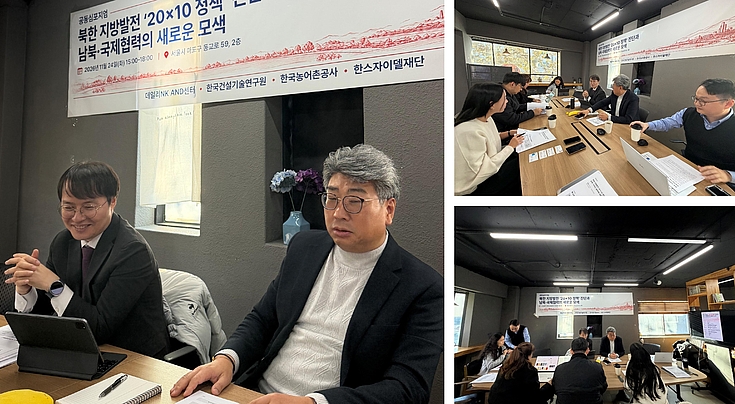
On 24 November, the Hanns Seidel Foundation Korea (HSF Korea), in cooperation with the Archive North Korea Data Center (AND Center) of Daily NK, the Rural Research Institute (RRI) of the Korea Rural Community Corporation, and the Korea Institute of Civil Engineering and Building Technology (KICT), convened an expert roundtable on new directions for inter-Korean and international cooperation. Participants examined recent developments in North Korea in the areas of regional development, food security, railway infrastructure, and environmental policy, discussing their implications for future cooperation and potential avenues for engagement.
Dr. Hyun-Uk Hwang from the AND Center examined how North Korea’s regional development plan was being implemented. Launched in 2021, the plan expanded in 2025 to include hospitals, integrated service centers, and grain management facilities in selected areas. Testimonies from Songchon and Sunchon County indicated that shortages of electricity, raw materials, and spare parts had disrupted factory operations. In one case, a food processing plant equipped to process wheat switched to making corn products because it could not secure a reliable wheat supply. Dr. Hwang stressed the need to monitor how facilities operate after opening and investigate the causes of supply disruptions. The question of what local factories in North Korea could reliably produce and supply also framed Dr. Kim Kwan-ho’s presentation on food security. Dr. Kim, of RRI, emphasized that access to adequate food is fundamental to protecting the right to life and that good nutrition supports children’s health, development, and participation in education. He identified military spending priorities, sanctions on North Korea, and tighter state controls on local markets as factors affecting food access. He also noted that grain production ranked first among the 12 major economic priorities under Kim Jong Un and highlighted the role of farm machinery, fertilizer, energy, and irrigation in stabilizing agricultural production.
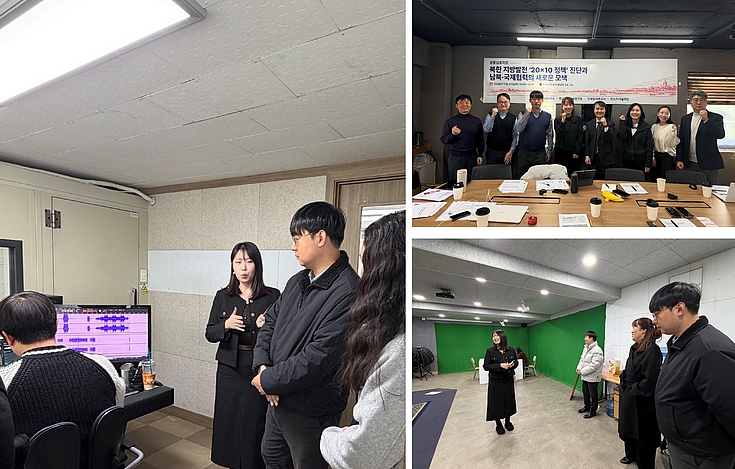
Dr. Song-Joo Lee from the KICT cited the opening of the New Yalu River Bridge as an example of expanding transport links between North Korea and China. Looking ahead to possible inter-Korean railway cooperation, he explained that the two Koreas would need common criteria to assess and repair bridges and tunnels along the Kaesong–Pyongyang section of the Gyeongui Line. Differences in the shape of specimens used to test the compressive strength of concrete illustrated why test results can be difficult to compare. Dr. Lee proposed compiling existing construction standards and research in a shared database, conducting parallel tests with identical samples and procedures when conditions allow, and using the results to establish common standards. Dr. Hyun-Ah Choi, HSF Korea, also shared the recent developments in North Korea’s environmental sector.
In the closing discussion, participants agreed on the need to explore new avenues for cooperation with North Korea. They acknowledged that identifying areas where cooperation is feasible and deciding how to pursue it remain difficult under current conditions.