
Forum
Expert Roundtable on Conservation along the East Asian–Australasian Flyway
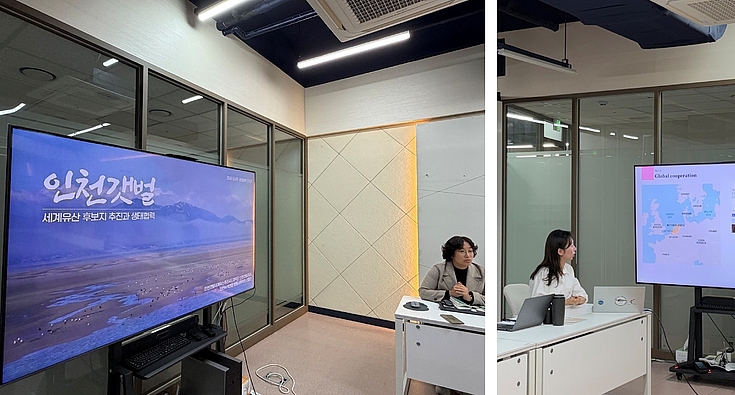
Hanns Seidel Foundation Korea hosted the expert roundtable on 12 November 2026 to discuss ecological cooperation along the East Asian–Australasian Flyway (EAAF) and the threats facing migratory birds and their habitats. Presentations covered the conservation of Incheon’s tidal flats, population trends and monitoring methods for Geese, and research on Yubu-do as a stopover site for the Spoon-billed Sandpiper.
Ms. Jeong-Eun Shin, Incheon Green Union, called for Incheon’s tidal flats to be added to Korea’s serial World Heritage property. She described the area as an important link in the western Korean Peninsula’s coastal ecosystems. Sediment from the open estuaries of the Han and Yesong rivers, together with a large tidal range, has created diverse mudflats, mixed flats, and sandflats. The area also supports endangered species, including the Black-faced Spoonbill, Chinese Egret, and cranes. Ms. Shin identified the Incheon–Gyeonggi area and Busan as potential additions to the World Heritage property. She noted that development pressure and competing interests make careful preparation and broad cooperation essential. In Ganghwa and around the islands near Yeongjongdo, proposed bridges and development could affect tidal flats and bird feeding and resting areas beyond existing protected zones. Fourteen civil society organizations in Incheon have supported the nomination effort through community meetings, forums, and site visits. Ms. Shin stressed the need for local authorities, residents, experts, and civil society to work together on conservation.
Dr. Eun-Jeong Kim, Seoul National University, presented long-term and seasonal trends in goose numbers, drawing on winter bird survey data collected by the National Institute of Biological Resources at major sites across Korea. Since 1999, counts of Greater White-fronted Geese and Bean Geese have generally increased. Counts of Tundra Bean Geese, analyzed separately, have fluctuated without a clear upward or downward trend. High autumn counts around Seosan and Cheonsu Bay may indicate a migration link between southeastern China and Korea. Further tracking and monitoring will be needed to clarify the route.
Dr. Donguk Han, PGA, Eco Korea, emphasized that goose surveys must account for both timing and location. More birds may use the Han River estuary and the Incheon area in October and early November, before wetlands freeze, meaning that midwinter surveys alone may not capture the full pattern. He proposed coordinating survey schedules through a nationwide monitoring network and using photographs, video, and call recordings to support identification. He also noted that more research is needed to clarify the characteristics and distribution of the western, central, and eastern subspecies of the Taiga Bean Goose.

Ms. Minjae Baek, EAAFP shared the background and initial findings of research on Yubu-do as a stopover site for the Spoon-billed Sandpiper. The Spoon-billed Sandpiper Task Force is conducting research in China and Korea to improve understanding of the species’ ecology and movements. In April 2025, researchers from the RSPB and the task force visited Yubu-do and conducted scan surveys. They observed Spoon-billed Sandpipers and many other shorebirds, confirming the site’s research potential. In October 2025, the team conducted a pilot study using mist nets and scan surveys under the required permits. Although no Spoon-billed Sandpipers were captured, the survey produced evidence supporting Yubu-do’s importance as a stopover site.
Across the presentations, participants highlighted the need for long-term monitoring across seasons and locations to understand how migratory birds use the EAAF. They also emphasized the importance of protecting feeding, resting, and stopover sites, including those outside designated protected areas. Continued cooperation among researchers, conservation organizations, local authorities, and communities can help connect monitoring data with effective conservation action.