Conference
48th UNESCO World Heritage Committee Session
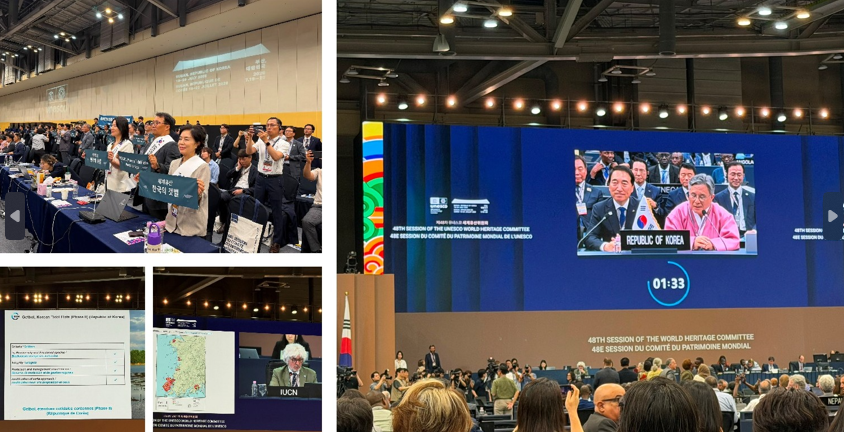
The 48th session of the UNESCO World Heritage Committee officially started on 19 July 2026 at BEXCO in Busan, Republic of Korea (ROK), marking the country's first time hosting this prestigious international event. The session will continue through 29 July 2026.
Hanns Seidel Foundation (HSF), together with its partners from the Republic of Korea, Jordan, and civil society organizations, participated in the meeting to promote the preservation and sustainable management of World Heritage sites and to strengthen international cooperation in the conservation of cultural and natural heritage.
A major outcome of the session was the inscription of the Aqaba Marine Reserve in Jordan and the Korean Tidal Flats, Getbol (Phase II), in the ROK on the UNESCO World Heritage List. These inscriptions represent significant achievements for HSF’s partner organizations in Jordan and the ROK, reflecting their long-standing commitment and contributions to the conservation of globally important natural heritage. HSF warmly congratulates its partners on these remarkable accomplishments.
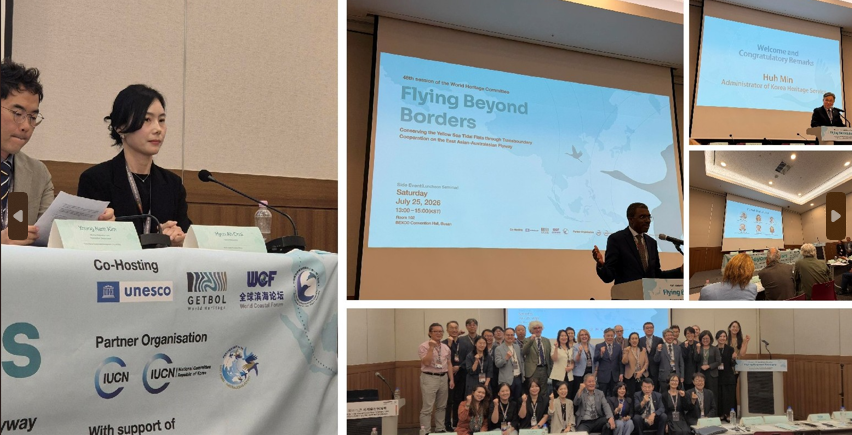
As part of the Committee's programme, HSF Korea contributed to the side event, "Flying Beyond Borders: Conserving the Yellow Sea Tidal Flats through Transboundary Cooperation on the East Asian–Australasian Flyway," held on 25 July 2026. Dr. Hyun-Ah Choi, Senior Researcher at HSF Korea, participated as a panellist alongside representatives from governments, international organizations, academia, and civil society.
The side event provided an important platform for HSF Korea to share its experience in habitat conservation in the Yellow Sea region and to exchange knowledge on the conservation of the Korean Tidal Flats (Getbol) and the west coast of the Democratic People's Republic of Korea (DPRK), including the Mundok Wetland. Participants also explored opportunities for future inter-Korean environmental cooperation and strengthened networks among key stakeholders working on wetland and biodiversity conservation.
Discussions throughout the event underscored the importance of transboundary cooperation in protecting migratory bird species and their habitats along the East Asian–Australasian Flyway. In particular, participants highlighted the ecological significance of the Yellow Sea region and emphasized that sustained international collaboration will be essential to safeguarding its globally important wetlands for future generations.
HSF Korea remains committed to working with its partners to promote international cooperation, knowledge exchange, and the conservation of World Heritage sites and ecologically important biodiversity.